Test Different Headlines
Your headline is often the first thing visitors notice when they land on your website. A weak headline may cause users to leave before exploring further.
Try testing different headline variations such as:
- Benefit-focused headlines
- Question-based headlines
- Number-driven headlines
- Urgency-focused headlines
For example:
Version A: “Improve Your Marketing Strategy”
Version B: “Increase Your Sales by 35% With Smarter Marketing”
Many businesses finds that more specific headlines generate better engagement.
Experiment With Call-to-Action Buttons
Call-to-action (CTA) buttons play a major role in conversions. Sometimes a small change in wording can create a noticeable difference.
Elements worth testing includes:
- Button text
- Button size
- Button placement
- Button color
- Button shape
Examples:
- Get Started
- Start Free Trial
- Try It Free Today
- Download Now
Visitors often responds differently depending on how the offer is presented.
Test Landing Page Layouts
Website layout affects how users interact with content. If visitors struggle finding information, they may leave without converting.
Consider testing:
- Single-column layouts
- Multi-column layouts
- Long-form pages
- Short-form pages
- Different content positioning
Sometimes moving important information higher on the page can improve conversion rates significantly.
Optimize Contact Forms
Forms are one of the biggest conversion barriers on many websites. Asking for too much information can discourage users from completing the process.
Things to test:
- Number of form fields
- Field order
- Multi-step forms
- Single-step forms
- Optional versus required fields
Many businesses discovers that shorter forms often generate more leads, although lead quality can vary.
Test Product Page Images
For eCommerce websites, product images have a huge impact on purchasing decisions.
You can test:
- Lifestyle images
- Studio product photos
- Zoom functionality
- Image galleries
- Product videos
Customers usually wants to see products from different angles before making a purchase decision.
Compare Different Pricing Displays
Pricing pages are often critical conversion points. Small adjustments can influence how visitors perceive value.
Ideas include:
- Monthly versus yearly pricing
- Showing discounts prominently
- Highlighting the most popular plan
- Displaying savings percentages
- Simplifying pricing tables
The way pricing information is presented can sometimes matter as much as the actual price itself.
Test Social Proof Elements
People are more likely to trust a business when they see evidence that others have had positive experiences.
Social proof tests may include:
- Customer reviews
- Testimonials
- Star ratings
- Case studies
- Client logos
For some businesses, adding testimonials near the call-to-action button can increase conversions considerably.
Experiment With Page Load Speed
Website speed is not only important for SEO but also for user experience.
Research consistently shows that slower websites often experience lower conversion rates. Visitors expects pages to load quickly and may leave if they don’t.
Test improvements such as:
- Image optimization
- Faster hosting
- Reduced scripts
- Content delivery networks
- Simplified page elements
Even a one-second improvement can sometimes produce measurable results.
Test Different Navigation Menus
Complicated navigation can confuse visitors and make it harder for them to find important information.
Things you can test include:
- Fewer menu options
- Different menu labels
- Sticky navigation bars
- Mega menus
- Simplified navigation structures
Users generally prefer websites that feels easy to navigate.
Try Different Trust Signals
Trust is one of the biggest factors affecting online conversions.
Examples of trust-building elements:
- Security badges
- Money-back guarantees
- Industry certifications
- Privacy assurances
- Secure payment icons
Visitors may hesitate to convert if they don’t feel confident about the website’s credibility.
Test Video Content Versus Text
Video content continues to grow in popularity. Some users prefer watching a short video rather than reading lengthy descriptions.
You can test:
- Product videos
- Explainer videos
- Customer testimonials
- Demo videos
- Video backgrounds
Depending on your audience, video may outperform traditional text-based content.
Experiment With Pop-Ups
Pop-ups can be effective when used carefully. However, aggressive pop-ups can also frustrate visitors.
Possible tests include:
- Exit-intent pop-ups
- Timed pop-ups
- Scroll-triggered pop-ups
- Discount offers
- Newsletter signup forms
The timing and design of a pop-up often determines whether it succeeds or fails.
Test Mobile User Experience
More website traffic now comes from mobile devices than desktop computers. Businesses that ignore mobile optimization are potentially losing conversions.
Areas worth testing:
- Mobile navigation
- Button sizes
- Form layouts
- Mobile checkout processes
- Page speed
A website that works perfectly on desktop does not always perform equally well on mobile devices.
Best Practices for A/B Testing
To get reliable results, businesses should follow a few important guidelines.
Test One Element at a Time
Changing multiple elements simultaneously makes it difficult determining which change caused the result.
Gather Enough Data
Ending tests too early can lead to inaccurate conclusions. It is important collecting enough data before making decisions.
Focus on High-Impact Pages
Start with pages that already receives significant traffic and contribute directly to conversions.
Use Clear Goals
Define success metrics before launching a test. This could be purchases, form submissions, downloads, or sign-ups.
Keep Testing
Consumer behavior changes over time. What works today may not work as effectively six months later.
Conclusion
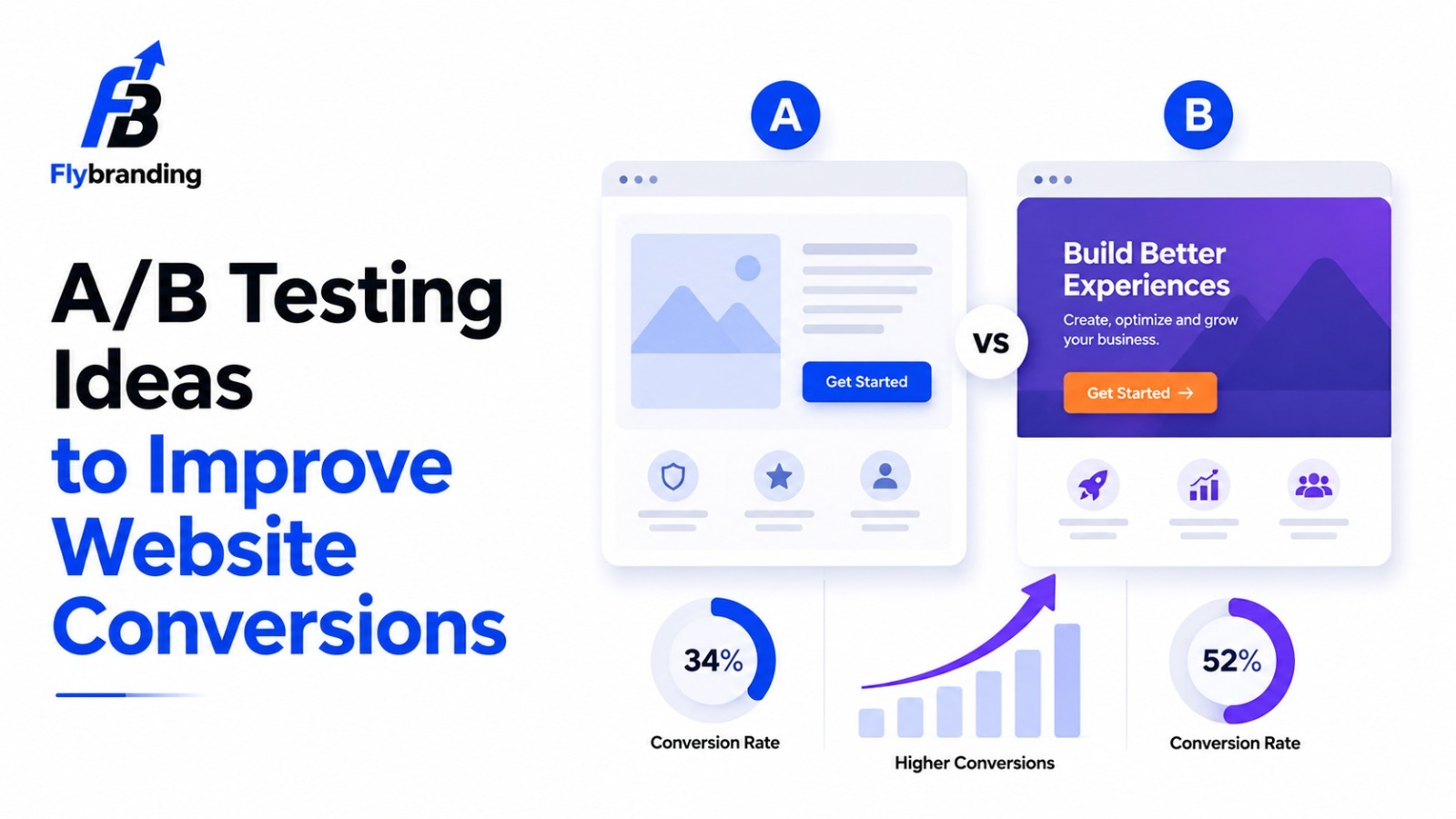
A/B testing is one of the most effective ways to improve website conversions without increasing traffic. By testing headlines, forms, CTAs, pricing pages, trust signals, and other key elements, businesses can identify what resonates most with their audience.
The most successful companies are not always the ones with the biggest marketing budgets. Often, they are the ones who continuously test, learn, and optimize their websites based on real user data.
Even small improvements can add up over time, leading to higher conversion rates, better user experiences, and increased revenue. If you are not already using A/B testing, now is the perfect time to start experimenting and discovering what works best for your visitors.